Undercuts + back sides
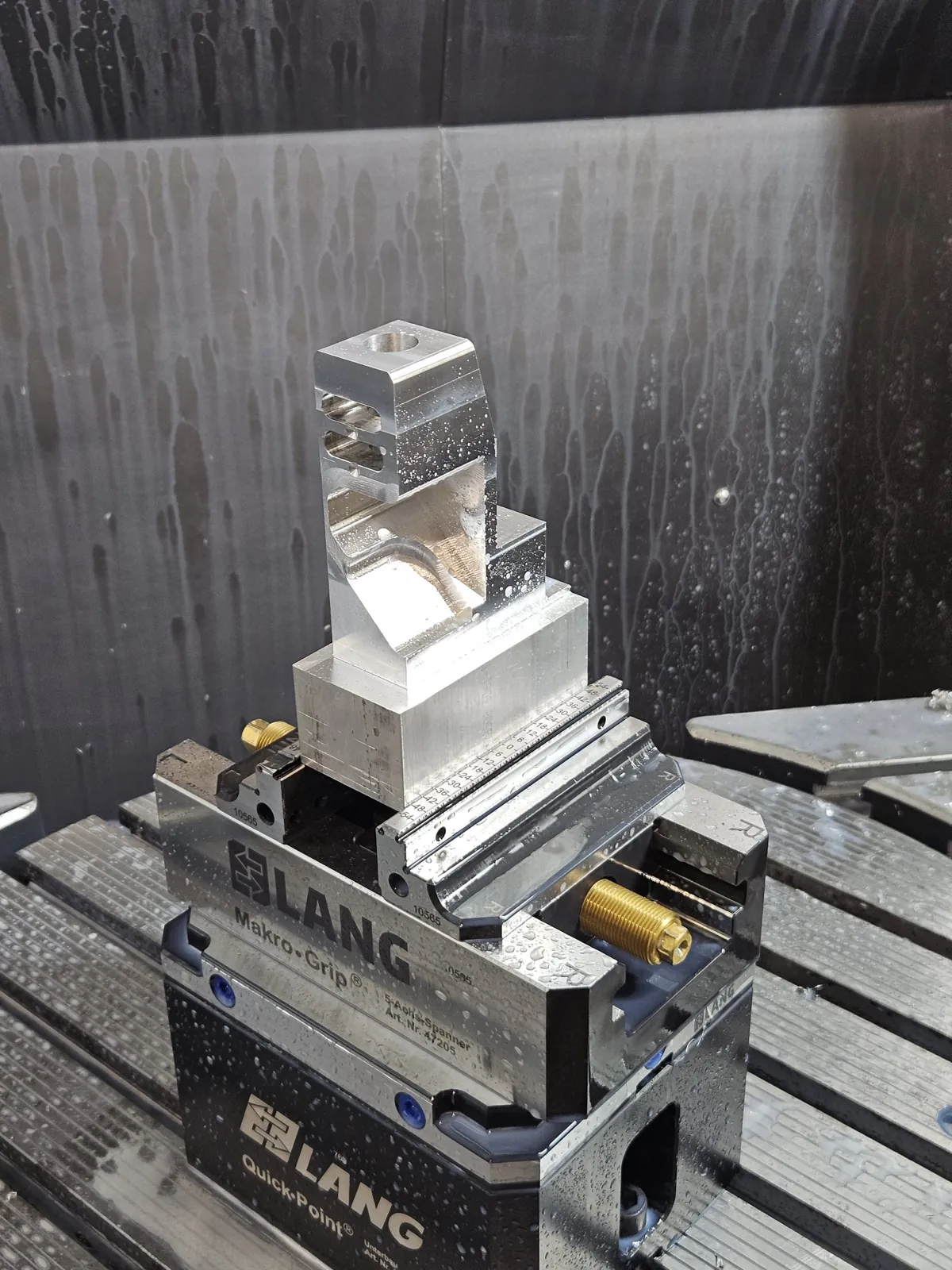
Dovetails, back chamfers and features under an overhang, cut with the tool tipped in instead of a second setup.
Home / Equipment / DMG MORI DMU 75
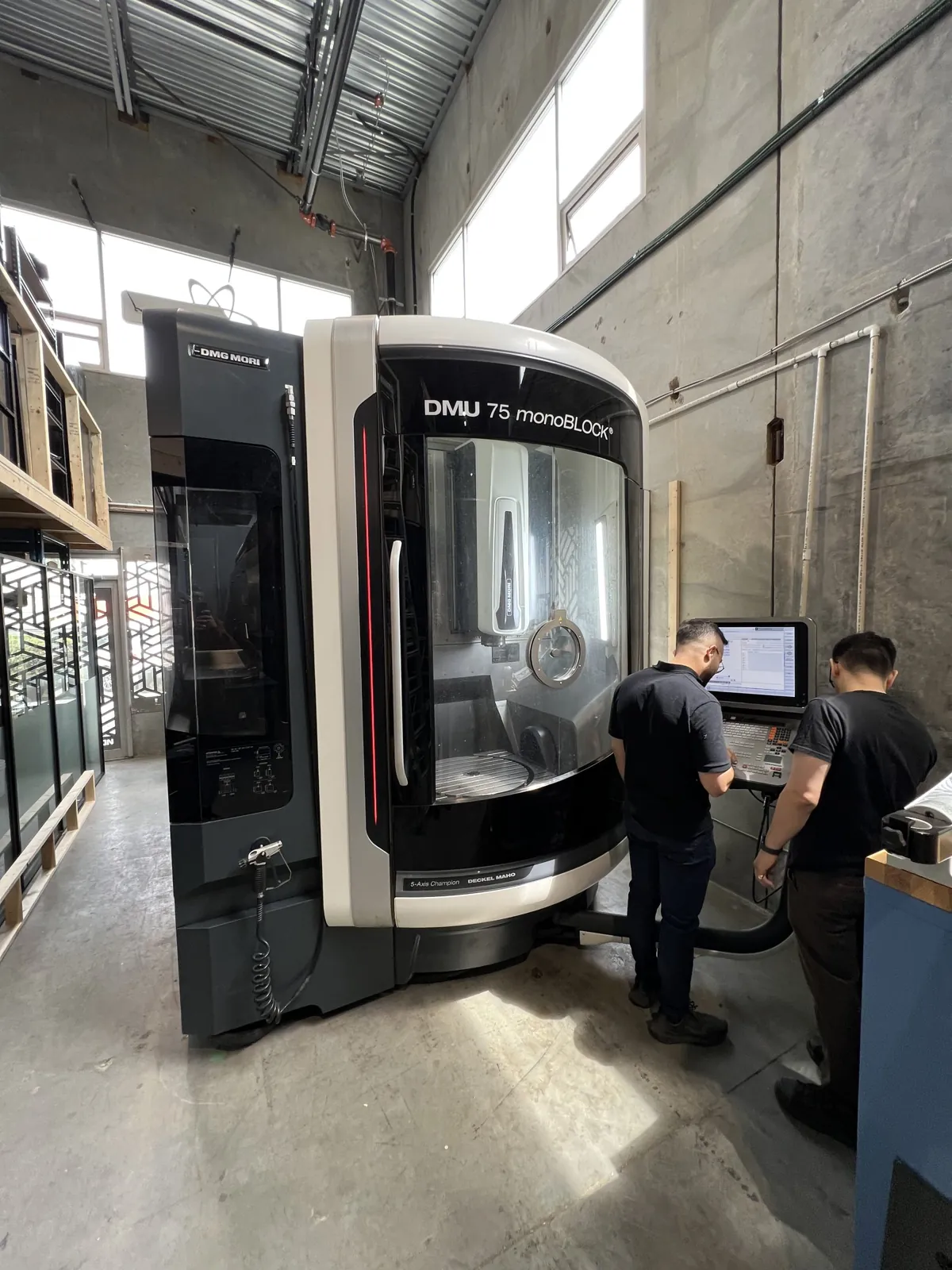
True simultaneous 5-axis machining, the kind of capability most local shops send away for. Complex parts, undercuts, compound angles and freeform surfaces, cut in one setup and held to ±0.005″.
Both rotary axes at once: the cradle tilts (B) while the table turns (C). This is how blades and freeform surfaces get cut.
Most shops need four setups. We need one. Every time a part is unclamped and flipped, a little accuracy and a lot of time go with it. The DMU 75 tilts and turns the part to the tool, so every feature is cut from the same zero.
A block with features on five sides. On a 3-axis machine it is clamped, cut, unclamped and flipped again and again. On ours it is clamped once.
Two extra axes don't just save setups. They open up shapes that are slow, risky or impossible on a 3-axis machine.
Dovetails, back chamfers and features under an overhang, cut with the tool tipped in instead of a second setup.
Faces and holes on two angles at once, square to their own face, not to the vise.
Manifolds, housings and blocks drilled and milled on five sides with no flip, so every feature lines up.
True simultaneous motion: blades, ports, molds and sculpted surfaces with the tool following the curve.
Tilting the part lets a short, stiff tool reach deep walls. Less chatter, better finish, tighter walls.
Round parts turned and milled in the same clamping: shafts with flats, flanges with bolt circles, rings with ports.
Frames come off our weld table and onto the DMU, so faces, bores and mounts end up flat and in line after the heat.
Locating plates, nests and inspection fixtures made in one go, so the datums stay where the drawing says.
The DMU 75 is the same class of machine aerospace and medical suppliers run. Here is where its parts end up.
Pocketed brackets and ribs, thin-wall housings, fittings, manifolds and compound-angle mounts: the classic 5-axis work. Lightweighting means cutting most of the block away while holding the walls, and that is where one clamping pays off.
From soft aluminum to tool steel and titanium. Tell us the grade; if it's unusual we'll source it.
We read your model or drawing and flag anything that will cost you, before we quote.
Toolpaths are programmed and simulated on screen, so the first cut is the right cut.
One fixture, one zero. The machine tilts the part to the tool, not the other way round.
Roughing, finishing and every face in one run, unattended where it's safe to.
Parts are measured against your drawing, deburred and packed. Inspection report on request.
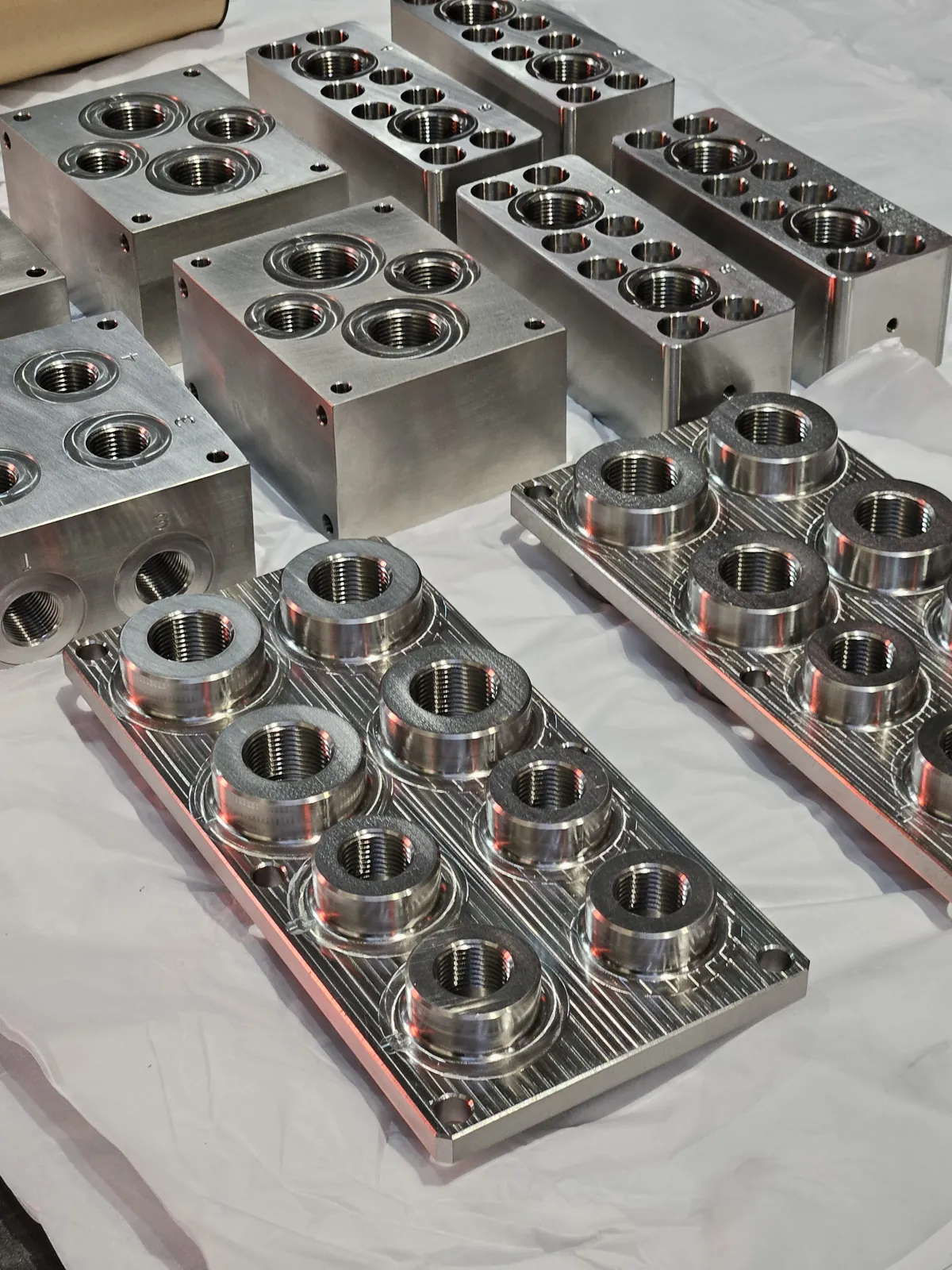
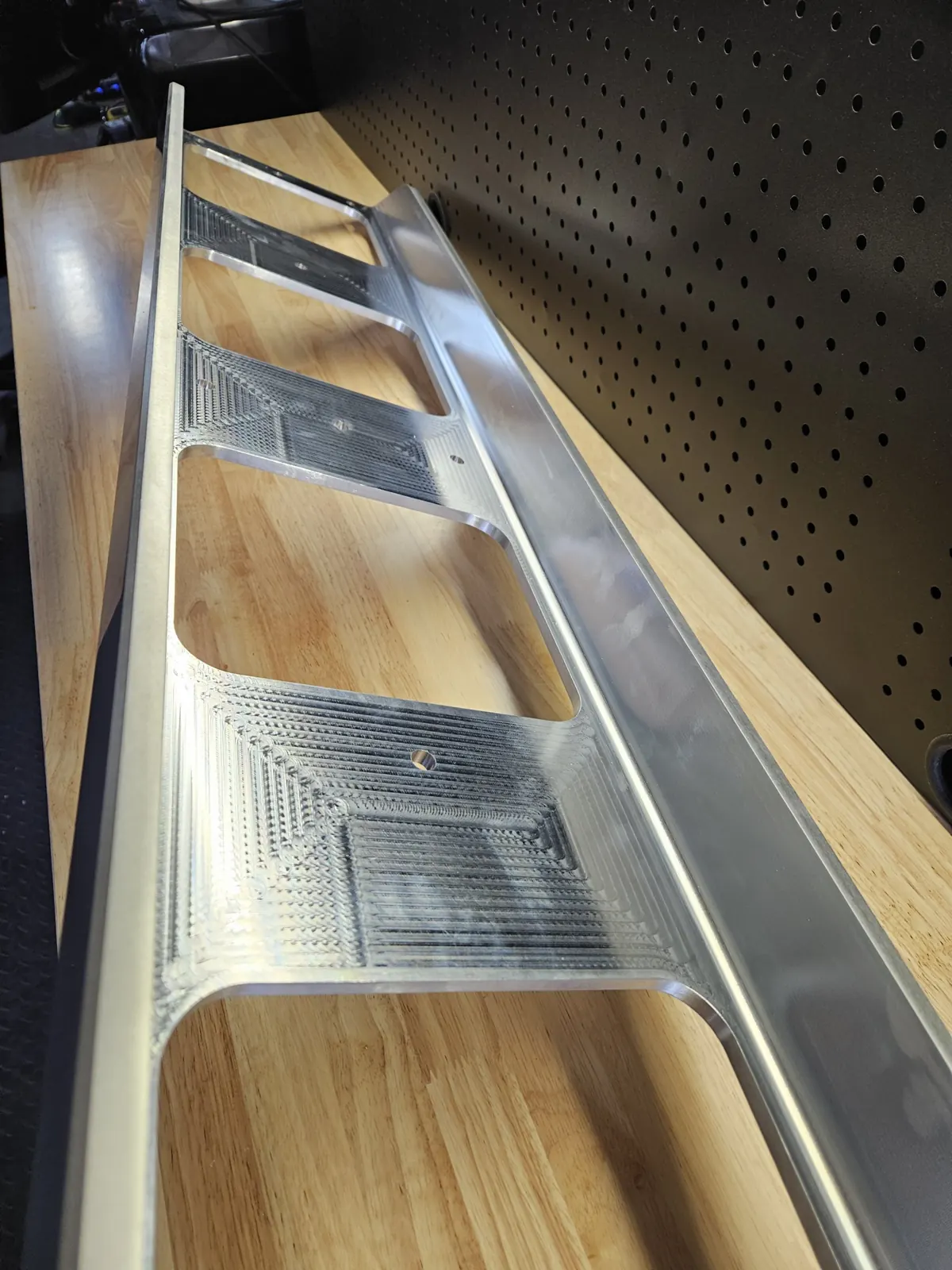
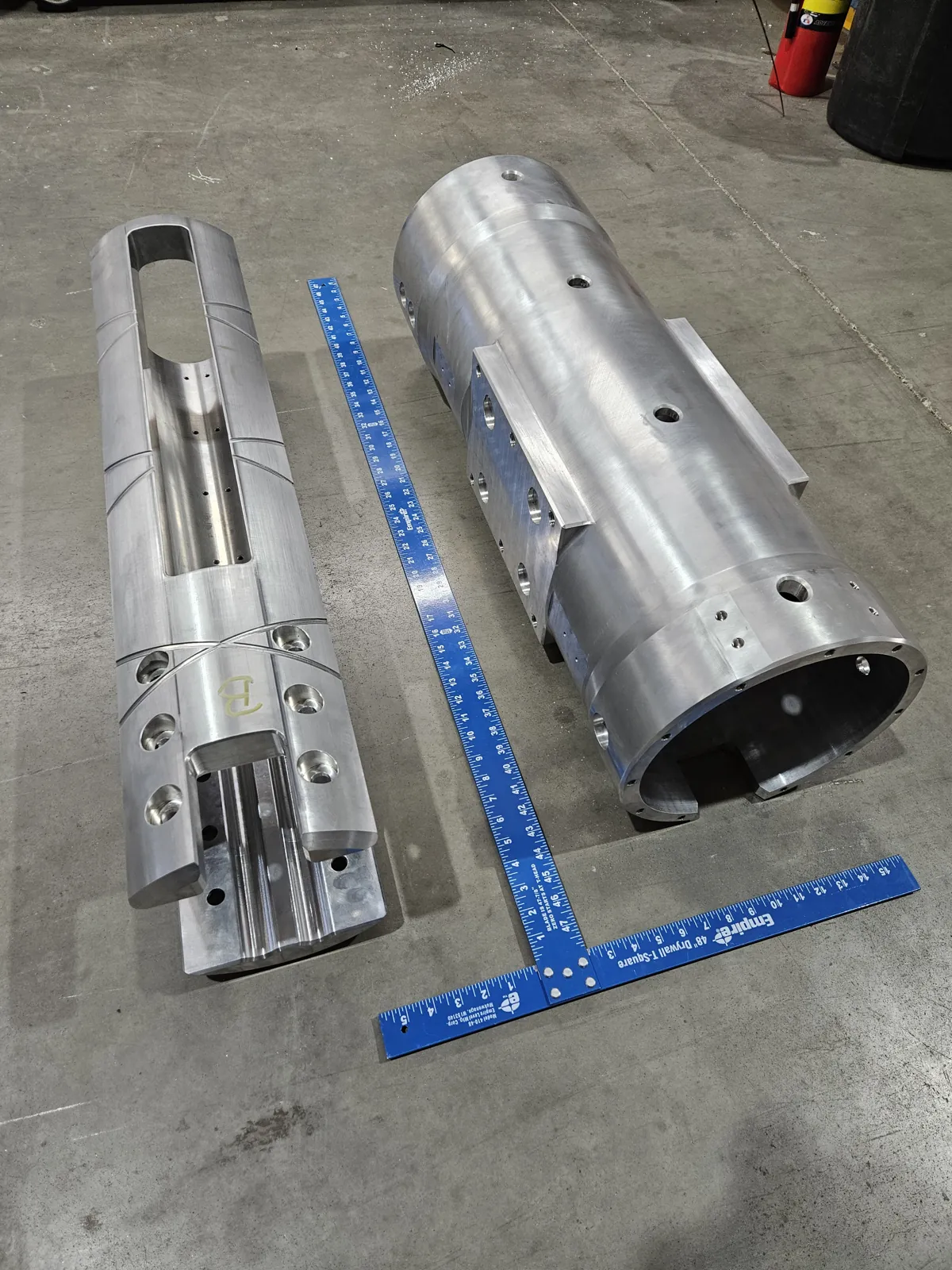
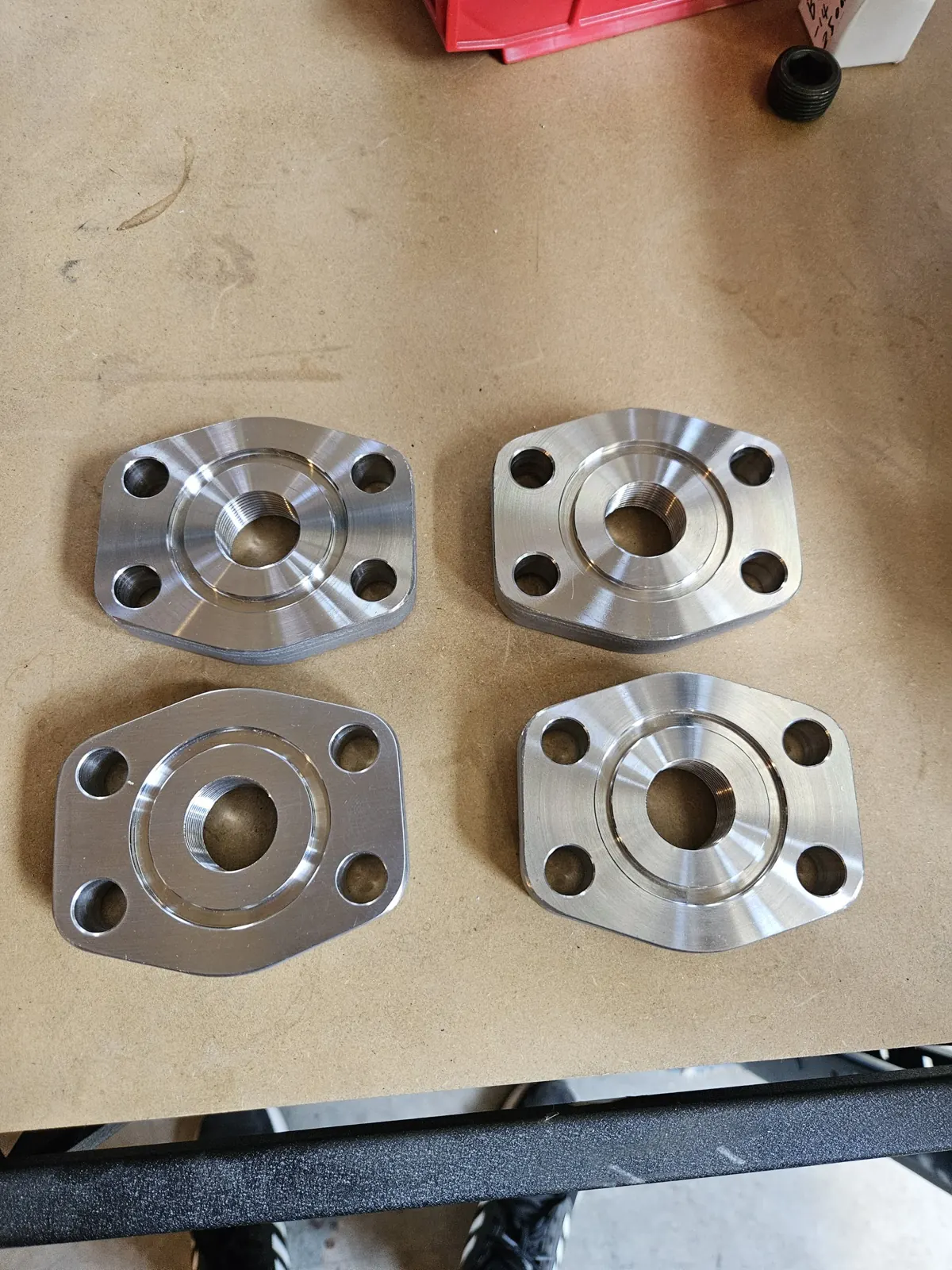
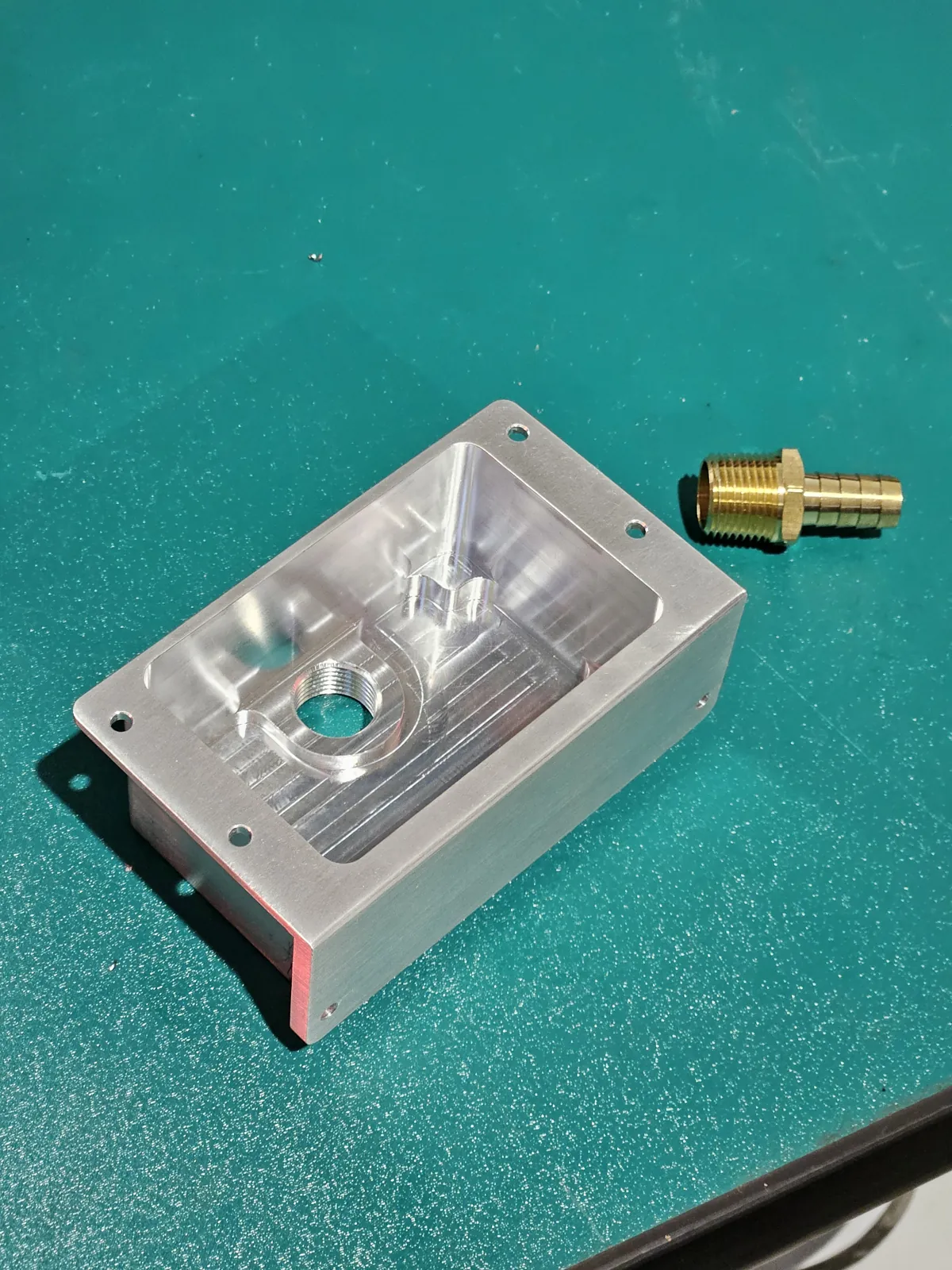
±0.005″ as standard, tighter on suitable features. Tell us which features are critical and we'll confirm for your material and geometry.
The table is 840 × 500 mm. Parts close to that size, or heavier ones, are worth a quick call so we can check the reach on all five sides.
We machine the kind of parts aerospace work needs: pocketed brackets, thin-wall housings, fittings and compound-angle mounts in 7075, 17-4 and titanium. Tell us the standard and paperwork your program needs (material certs, inspection reports) and we'll say straight up whether it's a fit.
3+2 tilts the part to a fixed angle and then cuts like a 3-axis machine, ideal for angled faces and holes. Full 5-axis moves all five axes at once, for blades, ports and sculpted surfaces. The DMU 75 does both.
STEP or Parasolid for 3D, plus a PDF drawing with tolerances and finish. A sketch, a photo or the worn-out old part also works: we reverse-engineer.
Both. 5-axis shines on one-offs and short runs because there is only one setup to make. For volume we'll suggest the fastest way, including fixtures that hold several parts.
Send a STEP and a drawing, or just the old part. A real person reads it and replies within 24 to 48 hours with a price, a date or a couple of questions.