
By the Spark Fabrication shop · October 27, 2026
Tube laserDesign tipsFabrication
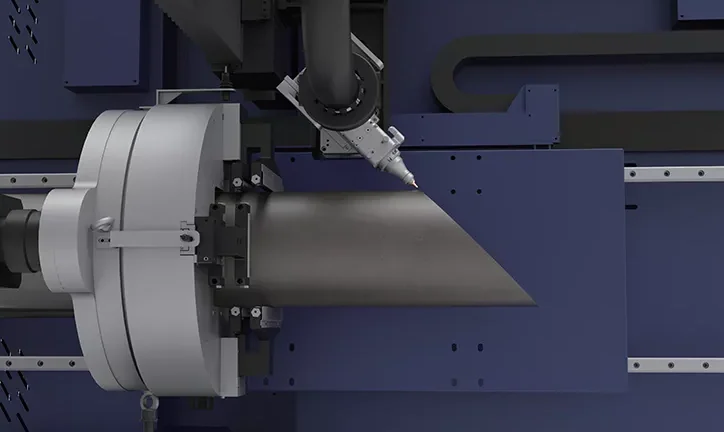
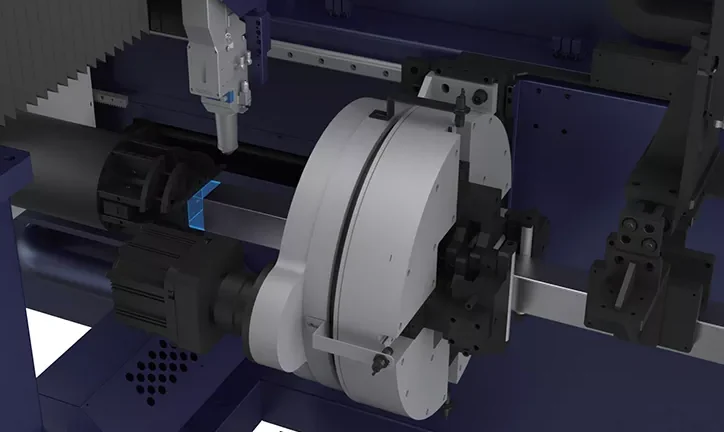
A fiber tube laser turns a stack of tube into finished, numbered parts in one pass: cut to length, with every hole, slot, cope and notch already in it. No saw, no drill press, no layout with a tape measure. But you only get all of that if the part is designed for the machine. These eight tips are what we look at first when a tube job comes in.
1. Let the joints locate themselves
The biggest win isn't the cutting, it's the fit-up. Design tab-and-slot joints so one tube drops into the other in only one position. The frame goes together square on the weld table, with few or no jigs, and it can't be assembled the wrong way round.
2. Cope round tube instead of grinding it
Where a round tube meets another, a laser-cut cope (the fish-mouth shape) wraps the tube it meets. That replaces hole saws, grinding and fiddly fit-up, and leaves an even gap for the weld.
3. Notch and fold where you can
A V-notch cut most of the way through a square tube lets you fold it into a corner. One tube and one weld can replace four pieces and four welds, and the corner comes out at the angle you drew.
4. Keep holes sensible for the wall
A common rule of thumb is to keep round holes no smaller than the wall is thick. Smaller holes are possible, but they cut less cleanly. If a small hole needs to be precise, for a dowel or a press fit, tell us: it may be better cut slightly small and reamed.
5. Keep features off the corners
Square and rectangular tube has rounded corners, and the radius changes from one mill to another. Holes and slots on the flat faces cut and measure the way you expect. If a feature has to cross a corner, say so on the drawing.
6. Remember the weld seam
Most welded tube has a seam running along the inside. It can get in the way of slots and of parts that slide inside each other. If it matters, mark which face the seam may sit on, or ask for seamless or a different profile.
7. Think about length and nesting
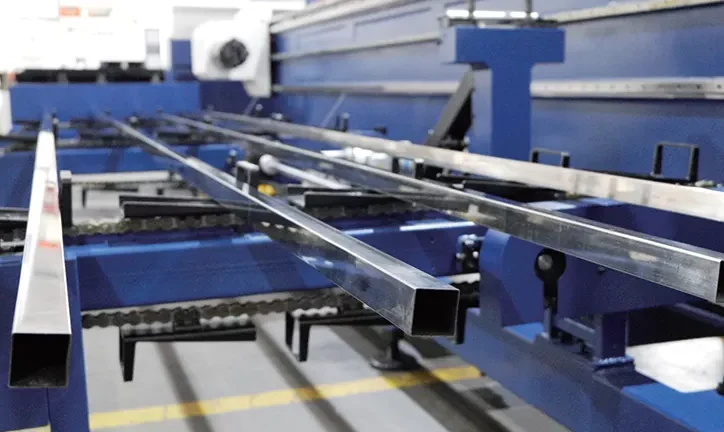
Our machine loads tube up to 9 m long. Parts are nested along each length to waste as little as possible, so standard stock lengths and parts that share a profile keep the price down. If you can, design a family of parts around one or two tube sizes.
8. Send a 3D model
A STEP or IGES model gives the exact profile, wall, length and every feature in one file, which is what the machine's nesting software works from. A drawing with the tube size, wall thickness, length and quantity works too, but a model is faster and leaves less room for guesses.
Does my tube fit the machine?
That fits the machine: 50 mm across, 6 m long.
Round, square or rectangular tube, angle, channel, beam or bar. Size across = the largest outside dimension.
What we cut
Our 6 kW fiber tube laser arrives in our Richmond, BC shop in early 2027. It cuts round, square and rectangular tube from 12 to 240 mm across, plus angle, C and U channel, I-beam and bar, up to 9 m long, in mild steel, stainless, aluminum and galvanized. Upload a STEP file to the tube laser estimator for an estimate, then contact us for an exact quote.
Questions we hear
What file should I send for a tube laser quote?
A STEP or IGES model is best. A drawing with the tube size, wall thickness, length and quantity works too.
What sizes can your tube laser cut?
Round, square and rectangular tube from 12 to 240 mm across, plus angle, channel, beam and bar, up to 9 m long, in mild steel, stainless, aluminum and galvanized. The machine arrives in our Richmond shop in early 2027.
Can you weld the parts after cutting?
Yes. Tube parts go straight to our MIG and TIG bay, and the 5-axis can machine critical faces true after welding.